
Ask any youth sports coach what the hardest part of their job is and most will not say it is the coaching. They will say it is everything around the coaching. The paperwork. The parent questions. The end-of-season reports. Figuring out who is ready to move up and who needs more time with a skill. Remembering where every athlete left off from the previous season.
All of that points to one core challenge: tracking athlete progress in a way that is accurate, consistent, and actually useful.
This guide covers what athlete skill tracking is, why it matters for youth sports clubs specifically, and how coaches can do it without it becoming another job on top of an already full plate.
What Athlete Skill Tracking Actually Means
Athlete skill tracking is the process of recording how each athlete is developing across the specific skills your program teaches. It is not about ranking athletes against each other. It is about understanding where each individual is right now so you can help them get to the next step.
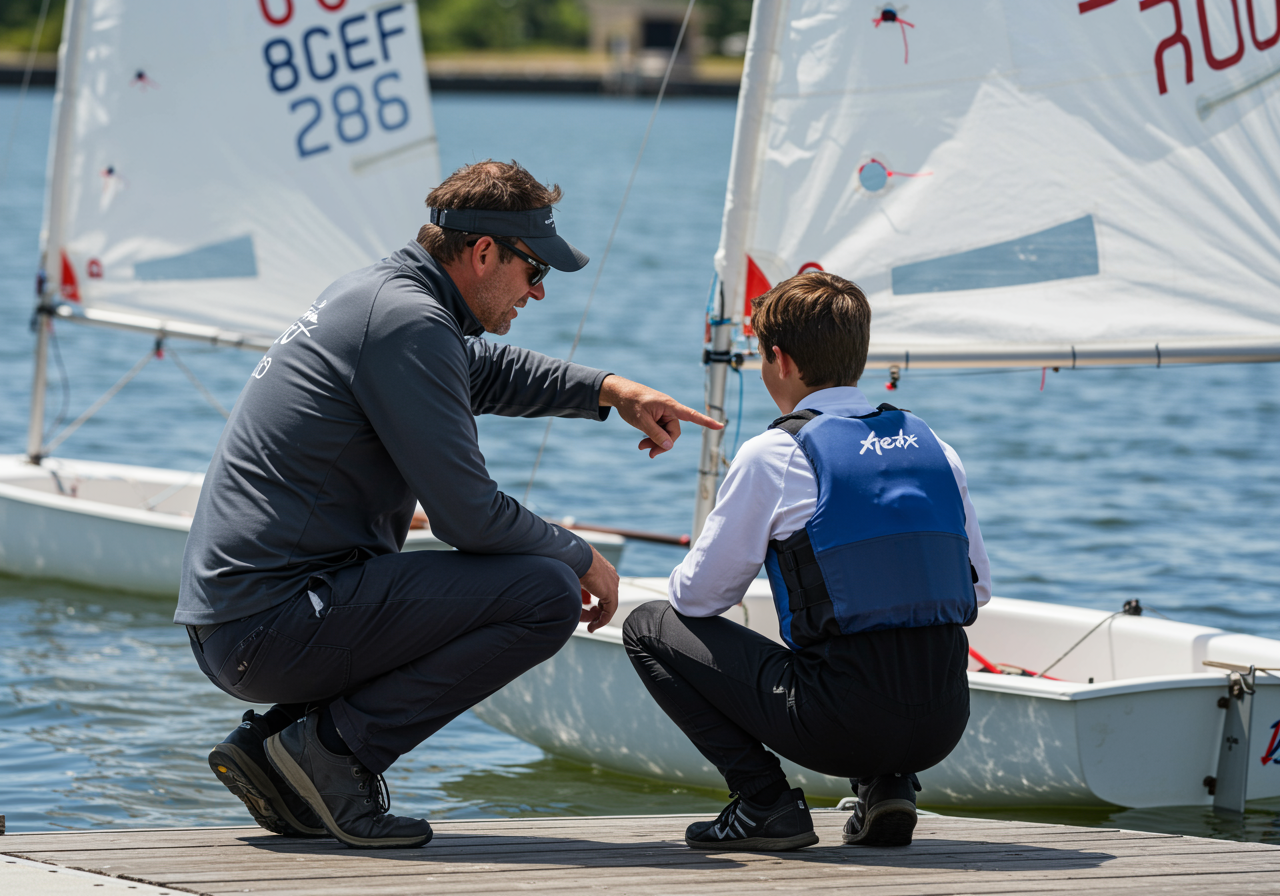
In a youth sailing program, that might mean tracking whether a sailor can rig a boat independently, demonstrate basic tacking, and handle a capsize. In a judo club, it might mean tracking specific techniques required for the next belt level. In a youth swimming program, it might mean monitoring stroke technique across four different styles.
Whatever the sport, the goal is the same. You want a clear, consistent record of what each athlete has learned, what they are still working on, and how they are progressing over time.
Without that record, coaching becomes reactive. You are making decisions based on what you can remember from last week’s session, or last season, or what you wrote on a sticky note somewhere. With a proper skill tracking system, coaching becomes proactive. You have the information you need to plan better sessions, give better feedback, and make better decisions about program design.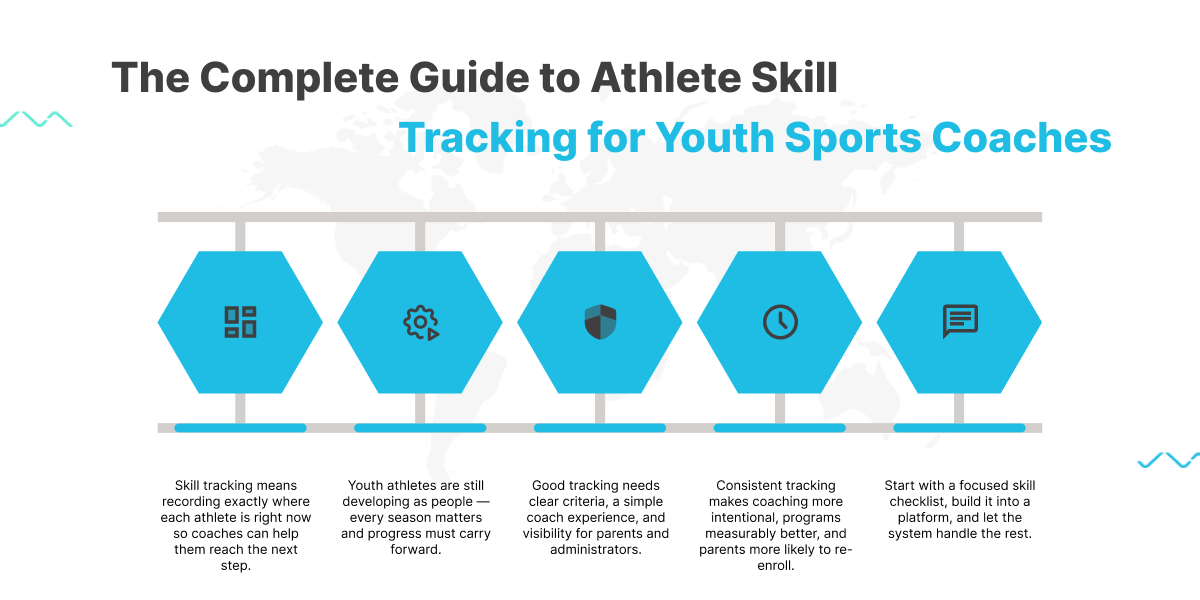
Why Youth Sports Clubs Specifically Need This
Youth sports is different from adult recreational sport in one important way: the people participating are developing. Not just developing as athletes, but developing as people. Every season matters. Every skill they build or miss builds on itself.
That makes consistency in tracking more important, not less. When a coach evaluates a young athlete on a skill, that assessment should be recorded somewhere that survives the end of the session. When that athlete returns next season, the new coach should be able to see exactly where they left off. When a parent asks how their child is doing, the answer should be specific and grounded in real evaluation data, not a general impression.
Most youth clubs are not doing this consistently. Coaches track things informally, if at all. Progress from one season rarely carries over to the next. Parents get vague updates. And clubs have almost no data on whether their programs are actually developing athletes the way they intended.
Checklick was designed to fix exactly this. It gives youth sports coaches a structured way to evaluate athletes during sessions using their phone or tablet, record that progress instantly, and have it available to the club’s administrators and to parents without anyone needing to compile a report manually. Every evaluation becomes part of a running record that follows each athlete through your program.
Port Credit Yacht Club used Checklick’s built-in progression displays to show parents exactly where each participant stood in the program pathway. For a club that was trying to retain young sailors after their first seasons, that kind of visibility made a real difference. Parents who can see their child’s progress are more likely to re-enroll the following year.
The Three Things Good Skill Tracking Requires
For athlete skill tracking to actually work in a youth sports setting, it needs three things.
The first is clear criteria. Before you can track whether an athlete has mastered a skill, you need to define what mastering that skill looks like. This is where your skill matrix comes in. A skill matrix is a structured list of the skills in your program and how each one is measured. For beginner programs, a simple completed or not completed scale is usually enough. For more advanced programs, a 1 to 10 rating that captures quality of execution gives you richer data.
Checklick lets you build custom skill matrices tailored to your program. You decide what skills matter, how they are measured, and how they are organized by level. Once your matrix is built, every coach in your club is working from the same criteria. That consistency is what makes tracking meaningful.
The second thing good skill tracking requires is ease of use for coaches. If tracking is complicated or time-consuming, coaches will not do it consistently. That is not a character flaw. It is just reality. Coaches are focused on coaching. Anything that pulls them away from that for more than a minute or two during a session will get deprioritized.
With Checklick, coaches evaluate athletes on their phone or tablet right there on the field, the water, or the mat. The interface is designed to be fast and simple. A coach can work through evaluations for a group of athletes in the time it takes to wrap up a session. The data is saved instantly and synced to the club’s system without any extra steps.
The third thing good skill tracking requires is visibility for everyone who needs it. Tracking data that only lives in one place and never gets shared is only half useful. Coaches need it. Administrators need it. And parents need it too, in a form that is clear and easy to understand.
Frequent athlete evaluation promotes communication and ongoing development for players, coaches, and parents by tracking progress, setting goals, and recognizing accomplishments. When parents receive regular, clear updates on how their child is developing, it changes the nature of the relationship between the family and the club. Questions shift from general concerns about whether the program is working to specific conversations about what comes next.
What Happens When You Track Consistently
The clubs that commit to consistent athlete skill tracking see several things change.
Coaching improves because it becomes more intentional. When a coach can see at a glance which athletes have completed a skill and which have not, session planning becomes much more targeted. You are not guessing about what to work on. The data tells you.
Program quality improves because you can actually measure it. If most athletes in your beginner program are completing all the skills by the end of the season, your program is working. If a specific skill is consistently incomplete across many athletes, that tells you something needs to change in how it is taught. Without tracking data, you would never know which situation you were in.
Parent retention improves because parents feel informed. One of the most common reasons families leave a youth sports club is that they do not feel like they understand what their child is getting out of it. Clear progress tracking solves that problem. It gives parents something concrete to see and respond to, which keeps them engaged and invested in the program.
And when a coach leaves, which eventually happens at every club, their athletes do not lose their development history. The records are in the system. The next coach can pick up exactly where the previous one left off.
How to Start Tracking Athlete Skills at Your Club
If your club is not tracking athlete skills in a structured way yet, the place to start is with your program design. What skills do you want athletes to develop at each level? Write them down. Keep the list focused. A skill checklist with twenty focused criteria is more useful than one with fifty that coaches will not have time to complete.
Once you have your skills defined, build them into a platform that makes evaluation easy. Checklick’s evaluation platform starts at fifteen dollars per month for clubs with under fifty evaluators, with a thirty-day free trial so you can see how it fits before committing. You can build your skill matrices inside the platform, distribute them to your coaches, and start collecting evaluation data right away.
From there, the system does the work. Coaches evaluate. Data flows to administrators. Parents get updates. And at the end of each season, you have a real picture of how your program performed and where to improve it next year.
Youth sports coaching is demanding enough without also having to manage athlete progress in your head or on paper. A proper skill tracking system takes that weight off and puts it where it belongs: in a structured, accessible, reliable record that helps everyone involved do their job better.
Start your free trial at checklick.com and see how much easier skill tracking can be when the right tools are in place.
